
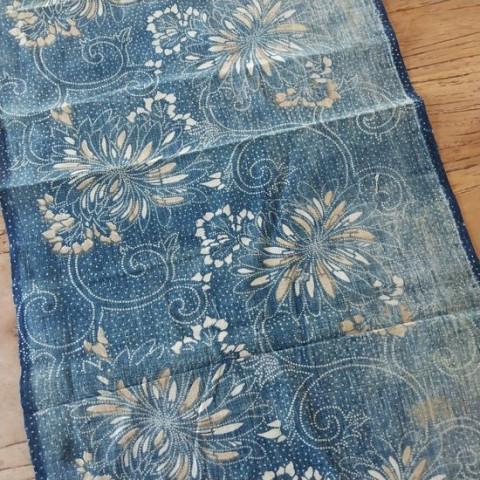
Japanese Indigo Stencil Dyeing and Boro – The Beauty of Time-Worn Textiles
Japanese antique textiles have a special beauty that only time can create. Among them, vintage indigo stencil-dyed fabrics, particularly those with a history of being used and repaired, have a unique character.
Their beautiful traditional patterns, varying shades of indigo, softened cotton, and traces of old stitching tell stories of everyday life in Japan many decades ago.
These are not simply old pieces of fabric. They are textiles that have been used, cared for, and preserved through generations.
What is Katazome?
Katazome is a traditional Japanese stencil-dyeing technique used to create patterns on fabric.
A paper stencil is placed over the fabric, and a resist paste, traditionally made using rice flour, is applied through the stencil. The fabric is then dyed, often with indigo. The areas covered by the paste resist the dye, leaving the original fabric colour visible and creating beautiful patterns.
Traditional designs include geometric shapes, flowers, plants, and many other Japanese motifs.
Katazome has been used in Japan for centuries, decorating kimono, yukata, and everyday household textiles. The technique allowed beautiful and detailed patterns to be produced on cotton fabric.
Indigo Fabrics Used in Traditional Japanese Bedding
Many of the vintage indigo stencil-dyed textiles found today were originally used as outer fabric for traditional Japanese bedding.
In the past, cotton was a valuable material in Japan, and people made great efforts to make the most of every piece of cloth. Indigo-dyed cotton was particularly practical because it was durable and suitable for everyday use.
These fabrics were not always made for clothing. They were also used for traditional bedding, where strong cotton textiles were needed to cover and protect the bedding.
Over many years of use, the fabric naturally became worn, thin, and sometimes torn. Rather than throwing it away, people repaired it with other pieces of cloth and reinforced the worn areas with hand stitching.
This practical approach to preserving fabric is closely connected to the Japanese tradition of Boro.
Boro – A History of Repair and Reuse
Boro refers to old Japanese textiles that have been repeatedly patched, repaired, and reused over many years.
Sashiko, a traditional hand-stitching technique, was often used to strengthen worn fabric. Small, regular stitches helped hold layers of cloth together and prevented damaged areas from tearing further.
Sometimes several different pieces of fabric were added over time, creating layers of patches and stitching.
Some of the textiles available today have had their old sashiko stitching removed, leaving behind tiny holes, stitch marks and subtle differences in colour. These traces are part of the fabric's history.
Each piece reflects the resourcefulness of the people who used it and their determination to make the most of the materials they had.
The Beauty of Naturally Faded Indigo
One of the most appealing features of antique indigo textiles is their colour.
Unlike newly dyed fabric, old indigo cotton develops subtle variations through years of washing, sunlight, and everyday use.
Some areas retain a deep, rich indigo blue, while others have faded into softer shades of blue. The fading is rarely even, giving each textile its own distinctive appearance.
The original stencil patterns also take on a softer character with age and use.
These natural changes cannot easily be recreated in new fabric. They are the result of decades of everyday life, making each piece unique.
Old Fabrics with a New Life
Once used in traditional Japanese homes, these textiles have found a new appreciation among collectors, textile enthusiasts and designers around the world.
The combination of traditional stencil patterns, beautiful indigo shades and the character of well-worn cotton makes these fabrics particularly special.
There is beauty in imperfection – in the faded colours, worn surfaces and small traces of past repairs.
Rather than being flaws, these details are what make antique Japanese textiles so fascinating.
Each piece carries a little part of Japan's everyday history, preserved in fabric for us to appreciate today.
Explore our collection of vintage Japanese indigo stencil-dyed fabrics.