
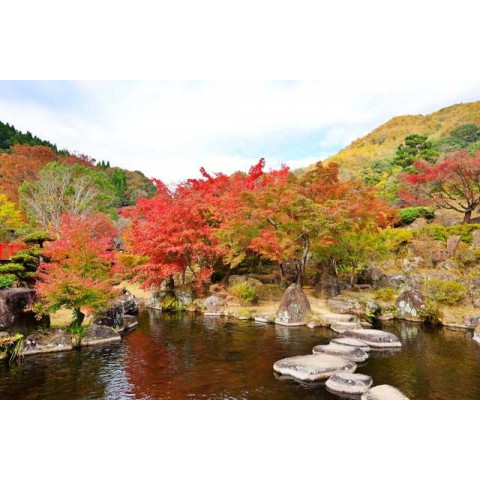
Japanese autumn, known as "aki" in Japanese, is celebrated for its beautiful and vibrant foliage, a phenomenon referred to as "kouyou". Kouyou translates to "red leaves," but it encompasses the entire spectrum of autumn colours, including vibrant reds, oranges, yellows, and browns. The changing colours of the leaves are a result of the chlorophyll in the leaves breaking down and other pigments becoming more visible.
The landscapes transform into a breathtaking canvas of rich and diverse colours. Popular spots for viewing kouyou include traditional gardens, temples, shrines, mountains, and rural areas.
Kouyou is deeply ingrained in Japanese culture and is associated with traditional activities like momijigari, which translates to "maple leaf viewing." People often take part in outings to appreciate the autumn foliage, similar to hanami (cherry blossom viewing) in spring.
The arrival of autumn is also marked by the availability of seasonal foods and the celebration of various festivals. It's a time for enjoying special autumn-themed dishes, such as chestnuts and sweet potatoes. Additionally, there are numerous festivals dedicated to celebrating the beauty of Kouyou.
Autumn in Japan brings relief from the summer heat, with cooler temperatures and lower humidity. This makes it a comfortable season for outdoor activities and exploration.
Kouyou is often associated with change, transition, and the transient nature of life. The falling leaves symbolize the impermanence of things, and the season is sometimes seen as a metaphor for the beauty of ageing.
Many tourists visit Japan specifically to witness the beauty of kouyou. Some well-known locations for autumn foliage include Kyoto, Nikko, Hakone, and the Japanese Alps.
Japanese autumn kouyou is special not only for its visual beauty but also for the cultural, symbolic, and seasonal aspects that make it a cherished time of the year in Japan.