
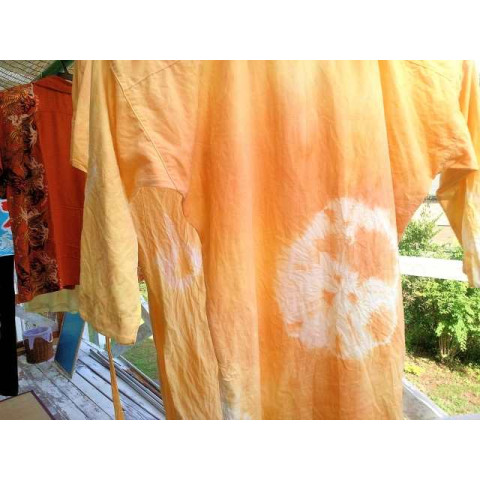
Kusaki-zome is a traditional Japanese natural dyeing technique that involves using plant materials to create dyes for colouring textiles. Kusaki-zome is translated as "plant dyeing." This technique has been practised in Japan for centuries and is a part of the country's rich textile and dyeing heritage.
In kusaki-zome, various parts of plants, such as leaves, roots, and stems, are used to extract natural pigments that can be used to dye fabrics like cotton, silk, and linen.
Process of Kusaki-zome:
Harvesting: Plants are collected and prepared for the dyeing process. Different plants may yield different colours.
Extraction: The desired plant materials are boiled or soaked in water to extract the natural dyes. This step may require different techniques and durations depending on the specific plant used.
Mordanting: The fabric to be dyed is often treated with a mordant, a substance that helps the dye adhere to the fabric and become more colourfast.
Dyeing: The fabric is immersed in the prepared plant dye bath and heated. The duration of the dyeing process, as well as the choice of mordants, can influence the final colour and its vibrancy.
Rinsing and Fixing: After dyeing, the fabric is rinsed to remove excess dye and mordant. It may also be exposed to air, sunlight, or other methods to help fix the colour and enhance its durability.
Kusaki-zome can produce a wide range of colours, depending on the plant materials used and the techniques employed. Common plants used for kusaki-zome include indigo for blue hues, madder for reds, and a variety of other plants for different colours. The choice of plants can determine the colours produced. Here are some common plant materials used in Kusaki-zome.
Indigo (Ai): Indigo is one of the most famous plants used in Kusaki-zome, and it is known for producing various shades of blue. The leaves of the indigo plant contain a natural blue dye that has been used for centuries.
Madder (Akane): Madder root is used to create red and pink dyes. The colour can range from pale pink to deep red depending on the preparation and the mordants used.
Safflower (Benibana): Safflower is used for creating a vibrant red or orange dye. It is often used to produce a bright and intense red colour.
Turmeric (Ukon): Turmeric is used for producing yellow and orange dyes. It can yield various shades of yellow depending on the concentration and processing.
Japanese Maple (Momiji): Japanese maple leaves are used to create soft pink and beige colours. The leaves are gathered in the autumn and can be used for a gentle pinkish hue.
Gardenia (Kuchinashi): Gardenia fruits are used to create yellow and orange dyes. The colour can range from pale yellows to deeper orange shades.
Walnut (Kurumi ): Walnut shells are used for creating brown and dark brown dyes. The shells are often crushed and boiled to extract the dye.
Pomegranate (Zakuro): Pomegranate rinds and seeds can be used to create a range of yellow and brown hues.
Tea (Cha): Tea leaves are used to create brown and greenish dyes. This is a common dye for fabrics like cotton.
Alder (Enju)**: Alder bark can be used to create shades of brown.
Amaranth (Amaransasu)**: Amaranth plants can be used to create pink and red dyes.
These are just a few examples of the many plant materials that can be used in Kusaki-zome. The choice of plant and the specific preparation techniques can result in a wide range of colours and shades, allowing for creativity and variation in the final textile designs. The specific process and choice of plant materials can vary from one Kusaki-zome artisan to another, contributing to the uniqueness of their creations.
Veges or vegetables can also be used for natural dyeing, and some of them have been historically used in traditional dyeing techniques like Kusaki-zome.
Onion Skins: Onion skins can be used to create a range of warm, earthy colours, including shades of yellow and orange.
Cabbage: Red cabbage, in particular, can be used to create blue and purple dyes, depending on the pH of the dye bath.
Beets: Beets can produce pink and reddish dyes, making them suitable for natural dyeing.
Carrots: Carrot tops and roots can yield yellow and greenish colours.
Spinach: Spinach leaves can be used to create green dyes.
These vegetable-based dyes are often used in combination with other natural materials or mordants to achieve a wider range of colours and to improve colourfastness. It's worth noting that while these vegetables can be used for natural dyeing, they are not traditionally part of the Kusaki-zome technique, which primarily focuses on plant materials like leaves, roots, and stems. However, artisans and textile artists may experiment with various plant materials, including vegetables, to create unique colours and designs in their dyeing projects.
This traditional dyeing technique is valued for its connection to nature and its role in preserving cultural traditions. Kusaki-zome textiles are often used for making kimonos, obis, and other traditional Japanese garments. While modern synthetic dyes have become more common in the textile industry, there is still a niche market for kusaki-zome due to its unique and environmentally friendly characteristics.