
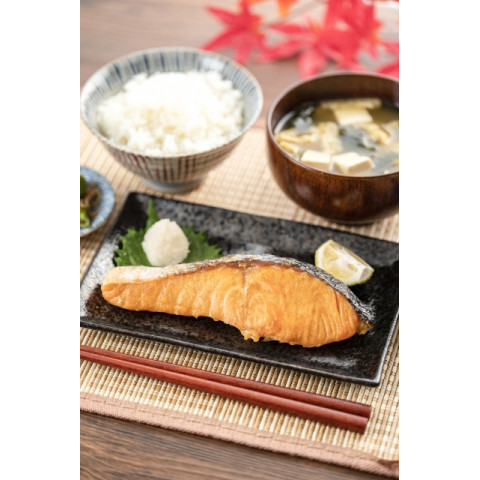
A typical Japanese breakfast often consists of various dishes that provide a balanced and nutritious start to the day, although individual preferences and regional variations may affect their composition.
Here are some examples of typical Japanese breakfasts.
Steamed white rice, Rice has been a staple food in Japan for centuries, and historically, the Japanese diet has included a significant amount of rice. It was estimated at around 54 kilograms (about 119 pounds) of rice per person yearly.
Miso soup is made by dissolving miso paste (fermented soybean paste) in hot water with Dashi (fish or seaweed stock) and adding ingredients like seaweed (wakame), tofu, green onions, and sometimes vegetables or fish.
Grilled fish, such as mackerel (saba), salmon (sake), or sardines, is a common protein source in a Japanese breakfast.
Tsukemono, These are various types of pickled vegetables, which add a crunchy and tangy component to the meal.
Natto, Fermented soybeans with a distinct odour and slimy texture, often served with soy sauce, mustard, and green onions.
Tamago, a Japanese-style omelette, often slightly sweet, made with eggs, sugar, and sometimes mirin (sweet rice wine).
Nori, roasted seaweed sheets are often served to wrap around rice or other items.
Vegetables, Fresh or cooked vegetables like spinach, daikon radish, and bamboo shoots may also be included.
Tofu, Silken tofu, often served with soy sauce and grated ginger.
Other Side Dishes: Depending on the region and personal preferences, other side dishes like grilled or pickled vegetables, salad, and various seafood items may be included.
Green tea (Ryokucha) is a common beverage to accompany a Japanese breakfast. It's a mild and slightly bitter tea that complements the flavours of the meal.
It's important to note that the specific components of a Japanese breakfast can vary by region and individual tastes. In more Westernized households and hotels, you might also find variations that include bread, butter, and jam. Additionally, modern lifestyles have led to changes in breakfast choices, with convenience foods becoming more popular, especially among busy urban dwellers. However, traditional Japanese breakfasts continue to be a cultural and culinary tradition for many.